Only 9% of Fresh Graduates Are Job-Ready: How to Build a Resume That Proves You Are
Only 9% of Fresh Graduates Are Job-Ready: How to Build a Resume That Proves You Are
Getting a degree is an important achievement—but is it enough to convince an employer that you are ready for the workplace?
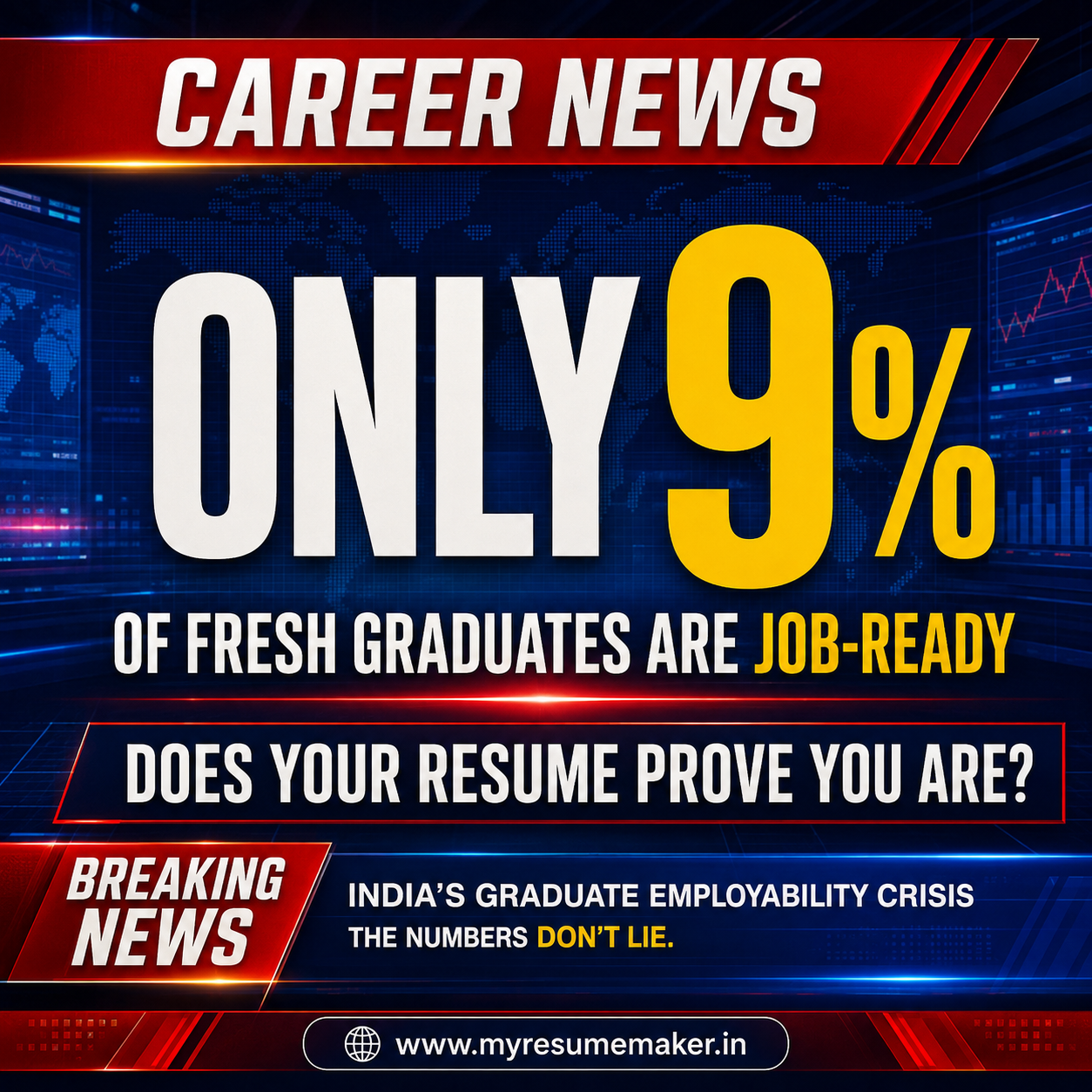
A recent report on college hiring in India revealed a significant gap between how students and employers view job readiness. While 68% of students believe they are ready to contribute from their first day at work, only 9% of employers agree. Moreover, many organisations believe fresh graduates require structured training before they can contribute effectively.
This does not mean freshers lack potential. It means employers are looking for clear proof of practical skills, communication abilities, industry awareness and problem-solving experience.
Your resume is the first place where you must present that proof.
What Does “Job-Ready” Mean to an Employer?
Being job-ready is not about knowing everything before joining a company. Employers understand that fresh graduates need guidance and training.
However, recruiters usually expect candidates to demonstrate:
- Basic knowledge relevant to the role
- Practical exposure through projects or internships
- Clear written and verbal communication
- Willingness to learn and accept feedback
- Problem-solving and analytical abilities
- Familiarity with commonly used tools
- Professional behaviour and accountability
A generic resume that only lists your degree, marks and personal information will not effectively communicate these qualities.
Your resume should show how your education, projects, certifications and activities have prepared you to work in a professional environment.
Why Many Fresher Resumes Fail to Get Interview Calls
Freshers often assume they do not have enough information to include in their resumes because they lack full-time work experience. This results in resumes containing generic career objectives, lengthy personal details and lists of skills without supporting evidence.
Here are some common problems:
1. Using the Same Resume for Every Job
A resume created for a software developer position should not be identical to one used for a business analyst, digital marketing or customer-support role.
Each job has different responsibilities and skill requirements. Recruiters and Applicant Tracking Systems look for keywords connected to the specific position.
Before applying, carefully read the job description and adjust your resume to highlight the most relevant skills, projects and certifications.
2. Listing Skills Without Evidence
Writing “communication,” “leadership,” “Python” or “digital marketing” under a skills section is not sufficient.
Recruiters want to understand how you have applied those skills.
Instead of simply listing Python, you could write:
“Developed a Python-based inventory tracking application that automated stock calculations and generated weekly reports.”
This statement provides context and demonstrates practical application.
3. Ignoring Academic Projects
Academic projects can act as valuable experience when presented correctly. Unfortunately, many candidates mention only the project title without explaining their contribution.
A strong project description should include:
- The problem or objective
- Technologies or methods used
- Your individual contribution
- The outcome or result
For example:
“Collaborated with a four-member team to develop a responsive e-commerce website using HTML, CSS, JavaScript and MySQL. Designed the product catalogue and improved mobile-page usability through responsive layouts.”
Even if the project was completed as part of your course, it still demonstrates teamwork and technical ability.
4. Using a Generic Career Objective
Statements such as “Seeking a challenging position in a reputed organisation where I can utilise my skills” do not differentiate you from other candidates.
Replace the generic objective with a focused professional summary.
Example:
“Computer Science graduate with practical exposure to Java, Spring Boot, MySQL and REST APIs through academic and personal projects. Interested in entry-level software-development opportunities where I can contribute to application development while strengthening my backend engineering skills.”
This tells the recruiter what you know, what you have done and the type of role you are seeking.
How to Create a Job-Ready Fresher Resume
Start With a Role-Specific Headline
Use a clear headline directly below your name.
Examples include:
- Entry-Level Java Developer
- Digital Marketing Fresher
- Graduate Mechanical Engineer
- Junior Data Analyst
- HR and Recruitment Fresher
Avoid vague headlines such as “Job Seeker” or “Looking for Opportunities.”
Include Relevant Technical and Professional Skills
Organise your skills into meaningful categories instead of placing everything in one long list.
Example for an IT fresher:
- Programming: Java, Python and JavaScript
- Frameworks: Spring Boot and React
- Databases: MySQL and PostgreSQL
- Tools: Git, GitHub, Postman and Visual Studio Code
- Professional Skills: Team collaboration, documentation and presentation
Include only the skills you can confidently explain during an interview.
Turn Internships Into Achievement-Based Experience
Do not describe an internship with only the company name and duration. Explain what you handled, learned or improved.
Instead of:
“Completed a digital marketing internship for three months.”
Write:
“Assisted in keyword research, social-media content planning and campaign reporting during a three-month digital marketing internship. Used Google Analytics and Meta Business Suite to monitor engagement and website traffic.”
Add Certifications Strategically
Certifications are valuable when they support your target role. Avoid including every webinar or participation certificate you have received.
Mention:
- Certification name
- Issuing organisation
- Completion date, if relevant
- Important skills covered
Prioritise certifications that required assessments, projects or practical assignments.
Quantify Your Achievements
Numbers make resume statements more credible and memorable.
For example:
- Coordinated a college event attended by more than 300 students
- Managed social-media content that increased engagement by 25%
- Completed a project using a dataset containing 10,000 records
- Led a five-member student project team
- Secured first place among 40 participating teams
Use honest and verifiable numbers. Never add fabricated achievements merely to make the resume look impressive.
Make Your Resume ATS-Friendly
Many companies use an Applicant Tracking System to organise and filter job applications. A visually attractive resume may still be rejected if the system cannot read it correctly.
To create an ATS-friendly resume:
- Use standard headings such as Summary, Education, Skills, Projects and Experience
- Include relevant keywords from the job description
- Avoid excessive graphics, icons and text boxes
- Use a clean and professional font
- Maintain consistent formatting
- Submit the resume in the requested file format
- Check spelling, dates and contact information carefully
Do not copy every keyword from the job description. Include only the skills and qualifications you genuinely possess.
Freshers Should Build More Than a Resume
A strong resume is important, but it must be supported by a credible professional profile.
Freshers should also focus on:
Optimising Their LinkedIn Profile
Your LinkedIn profile should contain a professional photograph, relevant headline, detailed About section, education, projects, certifications and skills.
Make sure the dates and information on LinkedIn match your resume.
Creating a Portfolio
Candidates in software development, design, writing, digital marketing, data analytics and similar fields can benefit significantly from a portfolio.
Your portfolio may include:
- GitHub repositories
- Website links
- Design samples
- Articles or content samples
- Data dashboards
- Case studies
- Project presentations
A portfolio allows recruiters to assess your work instead of relying solely on what your resume claims.
Preparing to Explain Every Resume Point
Anything included in your resume can become an interview question. Be prepared to explain:
- Your role in each project
- Challenges you faced
- Tools you used
- Decisions you made
- What you learned
- What you would improve next time
Clear explanations demonstrate confidence, ownership and practical understanding.
Your Resume Should Communicate Potential
Freshers are not expected to have years of experience. Recruiters are primarily looking for candidates who can learn quickly, communicate clearly and apply their knowledge in real situations.
A job-ready resume connects your education with the employer’s requirements. It does not merely state what you studied—it demonstrates what you can contribute.
If your resume is not generating interview calls, the problem may not be your qualification. Your strengths, projects and achievements may simply not be presented in the right way.
Build a Resume That Employers Can Trust
At My Resume Maker, we create professional, ATS-friendly resumes tailored to your career goals and target roles. Whether you are a fresher applying for your first job or an experienced professional planning your next career move, we help you communicate your skills, achievements and value effectively.
Don’t let a generic resume hide your potential.
Start building your job-ready resume with My Resume Maker today.
Visit: www.myresumemaker.in